
Industries / Energy & Power
Authority Content for Energy & Power Equipment Distributors
Engineering and procurement leads evaluating a power generation, grid, or energy equipment distributor research for months before the first call — and they're not evaluating a single manufacturer's product, they're evaluating whether the distributor carrying and supporting multiple manufacturers' lines actually understands the application. Sovereign Strategy builds the website and LinkedIn presence that earns trust during that research window, not after it.
The evaluation happens before the first conversation
Buyers in energy and power — generation equipment, grid infrastructure, switchgear, controls — run evaluation cycles measured in months, not weeks, when they're qualifying the distributors who stock and support that equipment. An engineering lead scoping a controls upgrade, or a procurement team building a qualified vendor list for a substation project, spends most of that time reading before a single call gets scheduled: reliability data, performance under load, compliance documentation, whatever a distributor has published that resembles their own application. This equipment is expected to run reliably for decades once it's installed, and replacing a qualified distributor mid-lifecycle is expensive — so switching costs are high, and whoever earns trust first tends to keep the account for a long time.
That combination — a long research phase and a high cost of getting the vendor choice wrong — makes early-stage content disproportionately important. A buyer who never fills out a form still forms an opinion of your company from what they find, and that opinion is largely set before your sales team ever hears their name. Our system is built around that fact: a durable technical presence that does the persuading while the buyer is still in research mode.
Reliability content, not trend content
An engineer evaluating power equipment is not looking for a company's position on the future of energy. They're looking for evidence the equipment holds up under load.
Content built around a trend instead of a spec
A generic agency fills the website and LinkedIn feed with broad language about the energy transition, sustainability, and innovation — content that could belong to almost any company in the sector and answers none of the questions an evaluation committee is actually asking. It doesn't address reliability under load, compliance with the relevant grid codes, maintenance intervals, or lifecycle cost. To a technically literate reader, it reads as noise, and noise doesn't survive a shortlist review.
Content built around how the equipment performs
Sovereign Strategy writes to the criteria an engineering team is actually scoring against: performance data, failure modes, compliance requirements, and the tradeoffs between approaches for a given application. It's the difference between a distributor that talks about power and a distributor that clearly understands how the equipment it carries behaves at full load, under fault conditions, and after fifteen years in service.
We write from the environment the equipment actually operates in
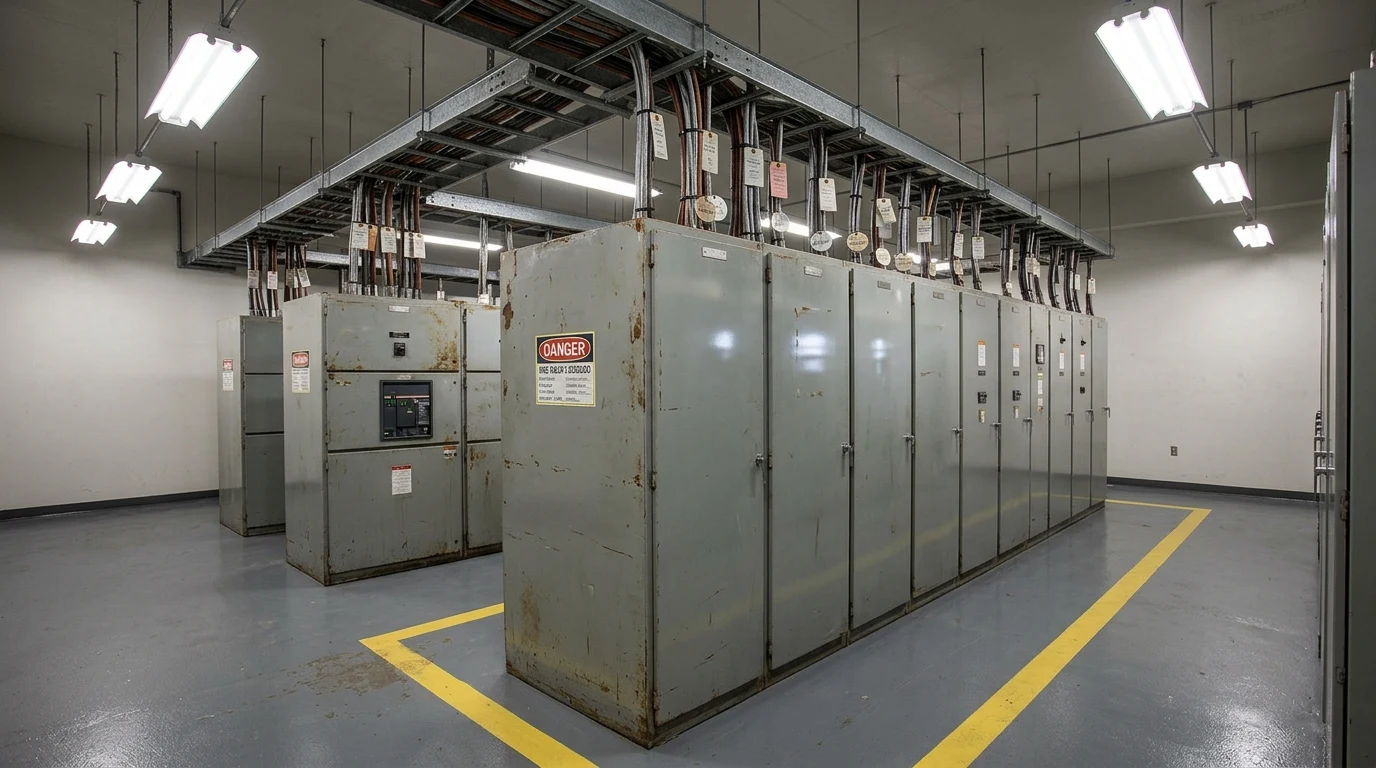
Power and energy content that reads as authoritative to an engineer usually looks unremarkable to everyone else — because it's grounded in how the equipment and the facility around it actually look and behave, not a stock rendering of a wind turbine at sunset. That grounding is part of what makes the content credible to the buyer we're writing for.
Two channels, one system
Every engagement runs both channels together — a durable technical reference base and a visible, human layer of judgment.
Website
The technical reference an evaluation team can build a spec around
Reliability and performance guides, compliance explainers, and SEO articles that educate buyers and build trust — written to withstand being read by a protection engineer or forwarded into an internal vendor-comparison memo. See Website Authority Content.
The judgment call, visible to the people scoring your shortlist
LinkedIn authority posts built around real technical positions — why a protection setting gets misapplied, what an interconnection study actually catches — published under the name of the person a buyer would want on the project. See LinkedIn Ghostwriting.
What this looks like in practice
Four content types, repeated and compounded over a long sales cycle — not a campaign, but a system that keeps working while the buyer keeps researching.
Reliability & performance guides
How a given class of equipment performs under sustained load, what derates it, and what its real failure modes are — written at the technical depth an evaluation committee is scoring against, not a marketing summary of a spec sheet.
Output: website reference content, cited during technical evaluation
Grid-code & compliance explainers
Plain-language breakdowns of what a given interconnection requirement, standard, or code actually requires and what it means for equipment selection — written to be the page an engineer finds while researching that requirement.
Output: website reference content, positioned for search and AI answer engines
Field-lesson LinkedIn posts
Short posts built around one real technical judgment call — a commissioning issue caught before startup, a maintenance interval most people get wrong, why one manufacturer's approach fits an application better than another. Published under a real name, in a real voice.
Output: LinkedIn authority posts, founder or technical-lead byline
RFP-adjacent technical documents
Detailed spec comparisons and technical backgrounders, already written to the level of detail an evaluation committee expects, that your sales team can hand to a buyer mid-cycle instead of drafting something from scratch under deadline pressure.
Output: sales enablement asset, handed over mid-cycle by your team
Built for a sales cycle measured in months
Both options on our pricing page produce this kind of content — the difference is how much of the long evaluation cycle each one is built to capture.
The base system: a durable technical presence
The Industrial Authority Engine builds the website and LinkedIn foundation described above — the reference content and technical judgment that a buyer finds and trusts while they're still in the reading phase, months before a sales conversation starts.
Demand capture: turning a mid-cycle researcher into a tracked lead
Because so much of this buyer's evaluation happens anonymously, the Demand Capture System adds gated technical resources, landing pages, automated nurture, CRM routing, and source attribution — so a procurement lead researching quietly in month two doesn't stay invisible until month six.
Talk to Us About Your energy & power presence
We'll show you what an engineering or procurement lead finds today when they research your company early in a long evaluation cycle — where the reliability and compliance content is missing or thin — and what a system built for that buyer would look like instead.