
Industries / Water & Environmental
Authority Content for Water & Wastewater Equipment Distributors
Municipal engineers, plant operators, and procurement staff evaluating a water and wastewater equipment distributor look past the line card straight to the claims — do the people who'll answer the phone actually understand the chemistry, the flow rate, the application, not just which manufacturers' equipment you carry. Sovereign Strategy builds the website and LinkedIn presence that holds up to that scrutiny.
Compliance-driven buyers verify before they trust
Buyers in water and wastewater equipment, treatment, and environmental services rarely start with a phone call. A plant engineer replacing a chemical feed system, or a procurement lead building a vendor shortlist, starts by reading — data sheets, application notes, spec comparisons, and whatever a vendor has published that resembles their own problem. They work inside NPDES permits, drinking water standards, and safety data sheets that don't tolerate a soft claim, and they read a vendor's website and LinkedIn presence the same way: looking for the detail that's wrong.
That makes authority content more important for this buyer, not less. A generic services page or a stock "solutions" post doesn't just fail to help — it actively works against you, because it reads as evidence the company doesn't understand the equipment it sells. A page that gets the mechanism right, cites the correct standard, and sounds like it was written by someone who has actually stood next to the skid does the opposite: it lets the buyer self-verify your technical competence before they ever pick up the phone. That's the premise behind our system — durable, source-backed content built to survive a technical reader's scrutiny.
"Verified" is not a synonym for "well-written"
In this industry, the two are unrelated. Fluent copy with a wrong flow rate does more damage than no copy at all.
Content that reads well and fails under scrutiny
A generic agency writes fluent copy about "advanced filtration solutions" that no plant engineer would ever say out loud. It blurs a valve type with a similar one, states a compliance requirement as universal when it's jurisdiction-specific, or gets a flow rate wrong. A technically literate reader catches it in the first paragraph — and that page becomes evidence the company doesn't understand its own product.
Content checked against your own specs and sources
Sovereign Strategy checks technical claims against the specifications, data sheets, and sources your own team already trusts before anything publishes — flow rates, materials, tolerances, regulatory references. Where a claim can't be verified against something concrete, we flag it and revise it or cut it, not soften it into vague language. That's what keeps a spec-literal reader on the page.
We write from what actually happens on the plant floor
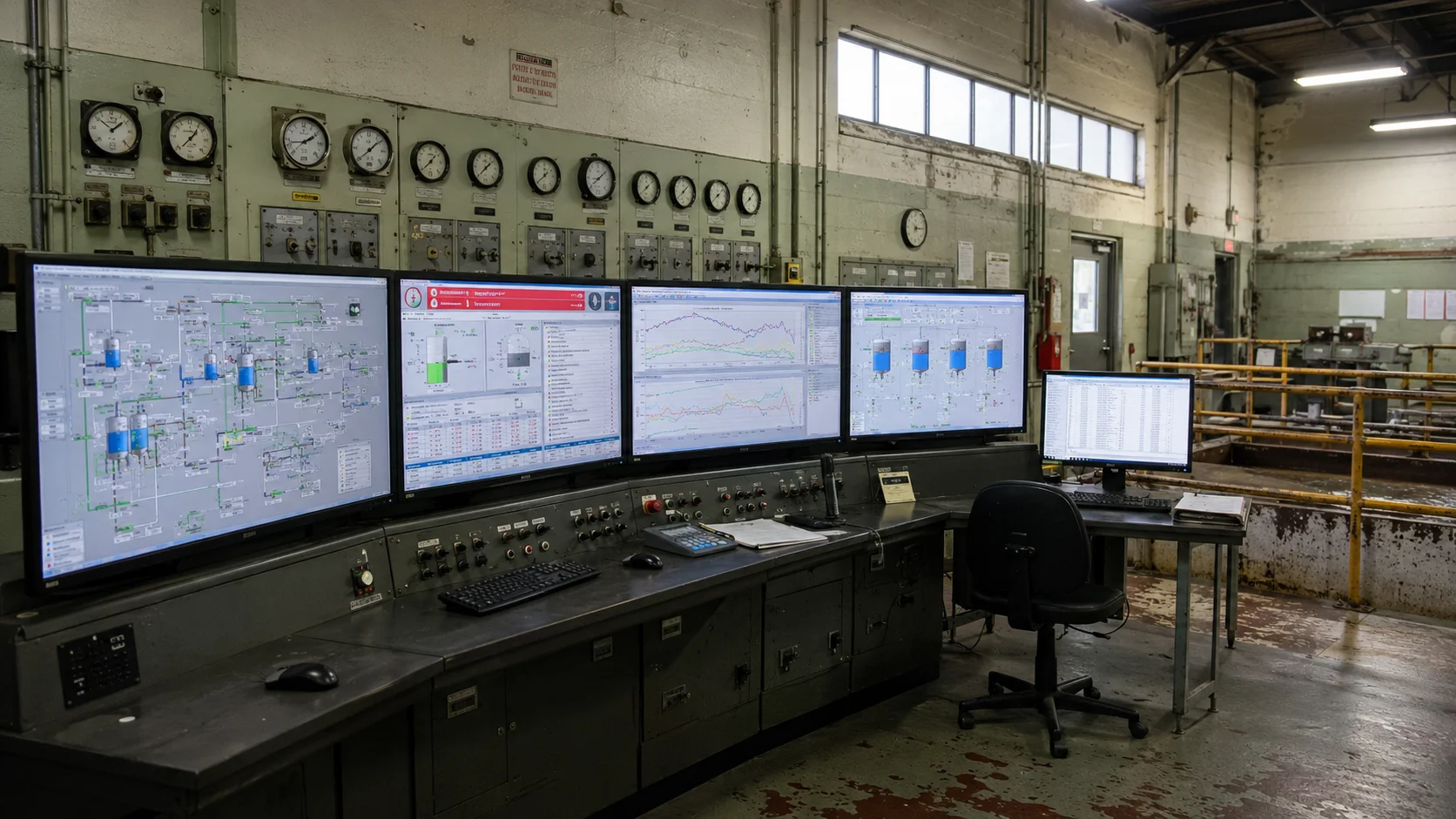
Most agency content about industrial water equipment is written by someone who has never stood in a plant. It shows — in the stock photography, in the softened language, in the confident wrong answer. We build content around how equipment actually behaves in the field: the analog gauge that's still trusted more than the new HMI screen next to it, the guardrail that's been repainted four times, the maintenance call that was made because a part was actually in stock, not because it was the textbook choice.
Two channels, one system
Every engagement runs both channels together — a durable technical reference base and a visible, human layer of judgment.
Website
The technical reference your buyer can cite internally
Application guides, spec comparison content, and SEO articles that educate buyers and build trust — written to survive being forwarded to an engineering manager or pasted into an internal evaluation memo. See Website Authority Content.
The founder's or technical lead's judgment, visible where it counts
LinkedIn authority posts built around real field lessons and technical positions, published under the name of the person a buyer would actually want in the room. See LinkedIn Ghostwriting.
What this looks like in practice
Four content types, repeated and compounded over time — not a single campaign, but a system that gets more citable with every piece.
Application & selection guides
How to select a chemical feed pump for a hypochlorite dosing application, what to check before specifying a filtration skid for a given water chemistry — written at the level a plant engineer actually reads and keeps.
Output: website reference content, cited in specs and RFP responses
Spec comparison content
Honest breakdowns of the tradeoffs between valve types, materials, or control architectures — including where a different approach is the right call for a given application. Built to hold up when a buyer reads it against a real spec sheet.
Output: website reference content, cited during vendor shortlisting
Field-lesson LinkedIn posts
Short posts built around one real technical judgment call — why a material failed early, what a startup sequence actually requires, what most people get wrong about a maintenance interval. Published under a real name, in a real voice.
Output: LinkedIn authority posts, founder or technical-lead byline
Regulatory & compliance explainers
Plain-language breakdowns of what a permit or standard actually requires and what it means for equipment selection — written to be the page a plant operator finds when researching a requirement.
Output: website reference content, positioned for search and AI answer engines
What "verified" means, concretely
This is not an upgrade or an add-on — it is how content is produced under both options on our pricing page, because a technically inaccurate page costs more credibility than no page at all.
Checked against approved specs and data sheets
Every technical claim — flow rate, material, tolerance, capacity — is checked against the specification or source document behind it before publication, not approximated from general industry knowledge.
Reviewed by your own technical staff
Draft content goes back to your team for a technical accuracy pass before it goes live. We would rather slow a publish date than put your name on a claim your own engineers wouldn't sign off on.
Sourced, not just stated
Where a claim rests on a regulation, standard, or third-party figure, the content says where it comes from — the same discipline a spec-literal reader already applies when evaluating a vendor.
Talk to Us About Your water & environmental presence
We'll show you how your current website and LinkedIn presence would hold up to a plant engineer's pre-call research today — where the technical claims are missing, weak, or would raise a question you'd rather answer live — and what a system built for a spec-literal buyer would look like instead.