What Generic Ghostwriting Does
Writes confident-sounding posts from a content calendar, with no real source behind the claim—then asks a busy executive to rubber-stamp something they’d never say out loud in a room full of engineers.

Service — LinkedIn Ghostwriting
A technical buyer doesn’t just evaluate a company. They evaluate the people running it. LinkedIn ghostwriting turns the founder or executive’s real field experience, technical judgment, and hard-won opinions into posts a skeptical buyer can read, weigh, and trust—without asking that person to become a writer.
This is the human authority layer of the same source-backed process described in full on The System: extract, verify, structure, publish.
Nothing publishes under their name that they didn’t actually say or approve.
How This Actually Works
Ghostwriting has a bad reputation in industrial circles for good reason—most of it is generic, unaccountable, and detached from what the named author actually thinks. Sovereign Strategy runs the opposite process: the founder or executive’s judgment is the raw material, not a brand voice we impersonate.
Writes confident-sounding posts from a content calendar, with no real source behind the claim—then asks a busy executive to rubber-stamp something they’d never say out loud in a room full of engineers.
Pulls from interviews, approved source material, field notes, and existing internal documentation to draft a post that reflects a position the person already holds—then sends it back for their review before anything publishes.
Short, recurring conversations built around what the person is already seeing in the field, on a project, or in a technical decision—not a blank-page writing prompt.
Specifications, internal documentation, case notes, and project detail the company already trusts, used the same way it’s used for website authority content.
Emails, internal memos, meeting notes, and offhand technical observations the person has already made—raw material most executives don’t realize is publishable.
Why LinkedIn Is the Human Authority Layer
A website proves a company knows its subject. LinkedIn proves a specific person does—and gives a buyer something a static page can’t: a visible, ongoing record of how that person thinks.
A specific technical opinion, stated consistently over time, is much harder to counterfeit than a polished About page. It’s exactly the kind of evidence a skeptical buyer goes looking for.
Procurement teams and engineers doing vendor research want to know who they’d actually be working with. A visible, credible executive answers that question before the first call.
Every post adds to a visible track record. A buyer who encounters the fifth post already has a different impression than a buyer who encounters the first.
The founder or executive supplies judgment in short interviews. They are never handed a blank page and asked to become a content creator on top of running the company.
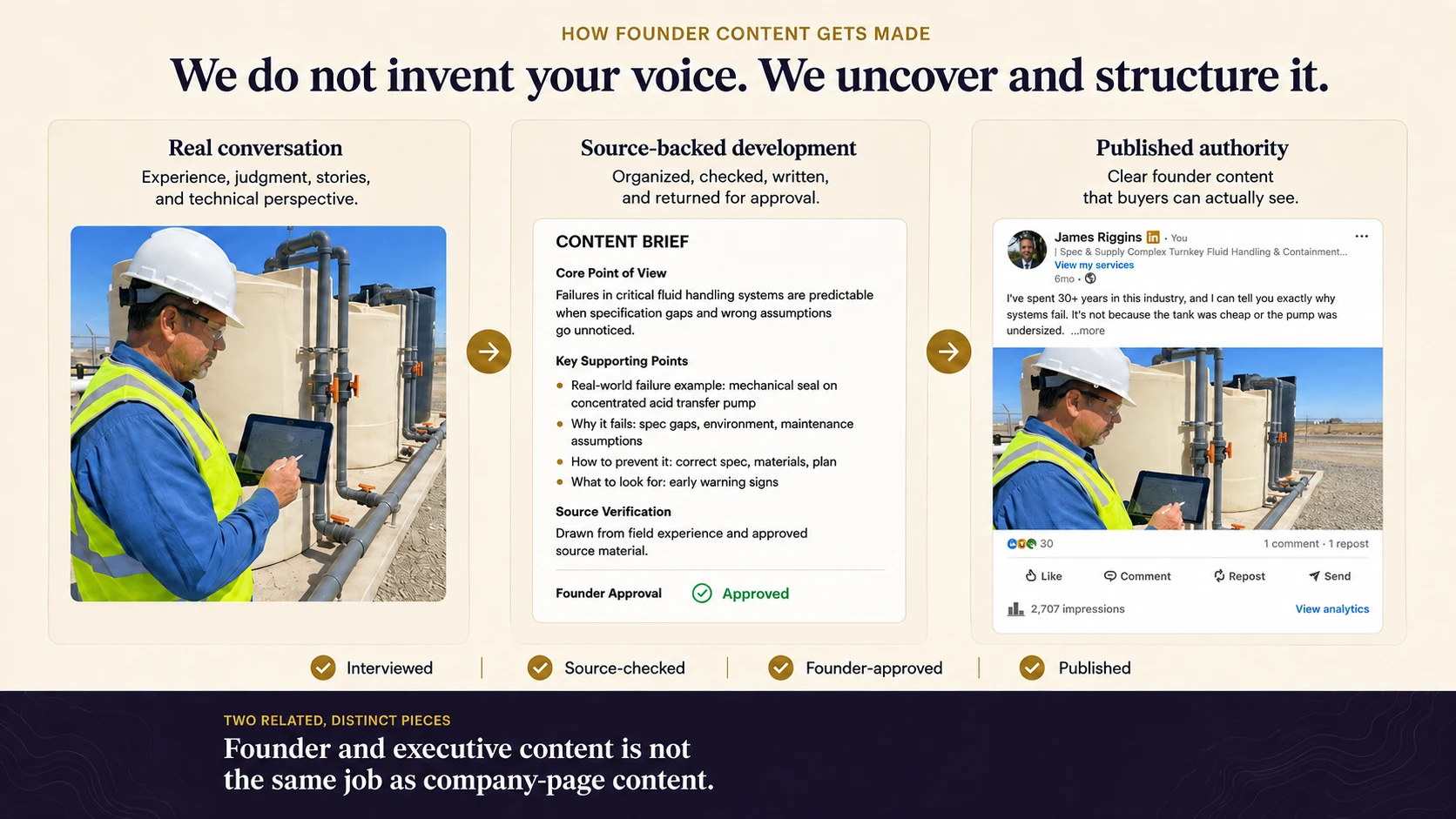
Two Related, Distinct Pieces
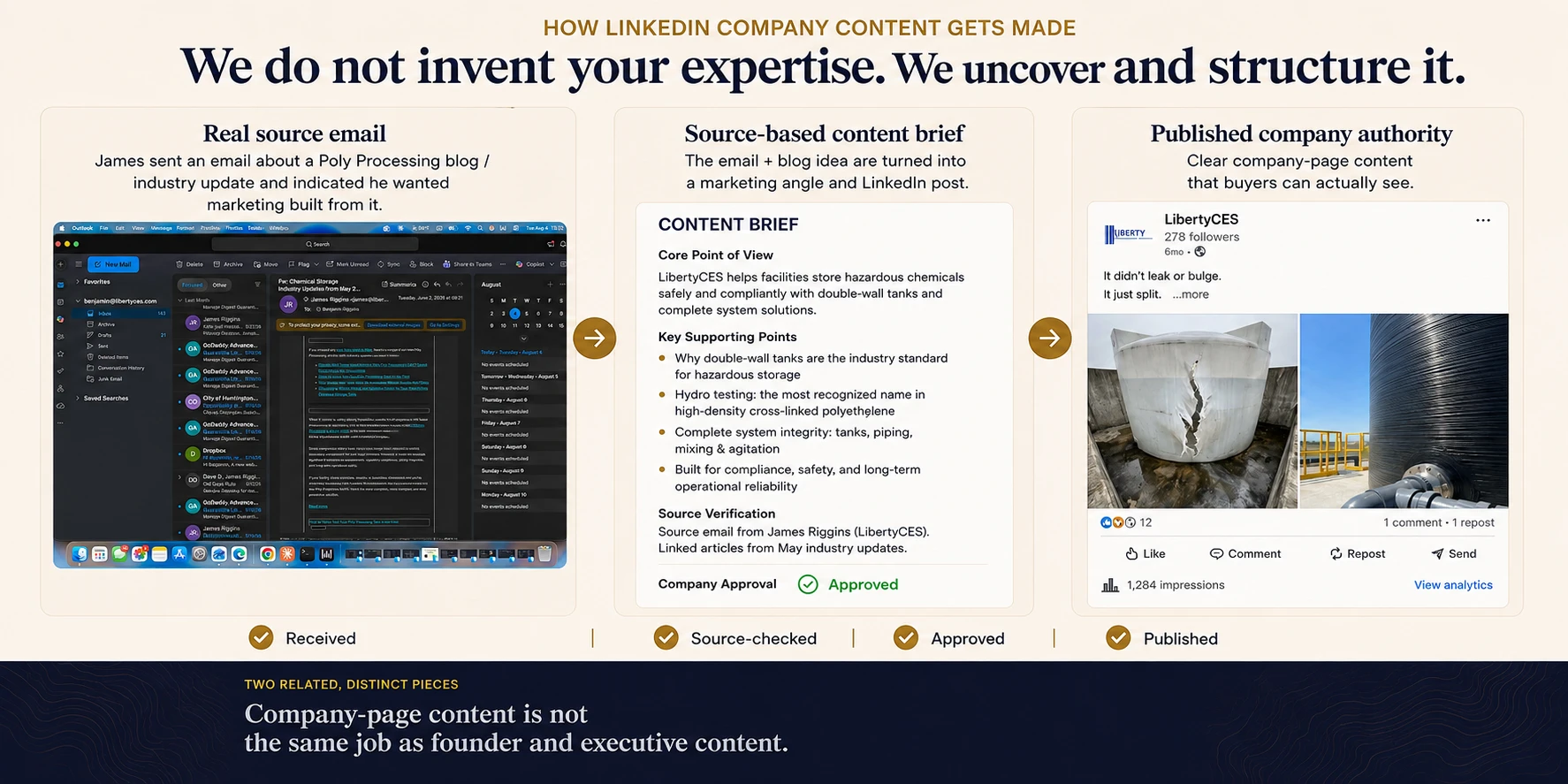
Both run on the same source-backed process, and both matter to a buyer doing due diligence—but they carry different weight and answer different questions.
Posts published under a named person’s own profile—technical commentary, field observations, positions on industry practice, and lessons from real projects. This is where individual credibility and judgment become visible, and where a buyer starts to trust the person before they ever trust the pitch.
Posts published under the company’s own LinkedIn page—capability updates, project and application content, and material that reinforces the same positioning carried by the website. This keeps the brand-level presence active and consistent with what leadership content is already saying.
Executive content builds trust in a person. Company-page content builds trust in the organization behind them. A buyer doing real diligence checks both.
How a Post Actually Gets Made
The workflow is built to take almost nothing off a busy executive’s plate while keeping their real judgment in the driver’s seat.
A short, recurring interview, plus whatever approved source material and existing notes are already on hand—specifications, project detail, internal commentary.
Raw MaterialWe isolate the actual opinion or observation buried in the conversation—the thing this person believes because of what they’ve seen, not a generic industry take.
A Real AngleThe post is written to sound like the person who said it—not a house style imposed on top of them.
Ghostwritten DraftThe person reviews the draft before it publishes. Nothing goes out under their name that they haven’t seen and approved.
Approved PostThe post goes live on the appropriate profile or page, and its performance feeds the next round of interviews and topics.
Published, Visible AuthorityIncluded on Every Tier
Founder/Executive Profile Optimization and Company Page Optimization are included on both the Industrial Authority Engine and the Industrial Authority Engine + Demand Capture tier—full detail on Pricing.
The profile itself—positioning, credibility signals, and connection to the company—is strengthened first, so the person publishing technical commentary already reads as credible and relevant before the first ghostwritten post goes live.
The company page is brought up to the same standard, so it supports and reflects the authority being built through leadership content and the website rather than sitting stale beside it.
What a Post Is Actually Built From
Every published post traces back to a real interview or source document. The structure below shows the shape a post takes; the bracketed text is a placeholder, not a quote from any client.
“[Sample post headline drawn from a real field observation]”
“[Specific detail from an actual project, application, or specification the person has direct experience with]”
“[The position this person actually holds, and why—stated in their own terms]”
“[What this means for someone evaluating a vendor or making the same decision]”
Where This Fits
It runs alongside website authority content as the Industrial Authority Engine ($2,500/mo). On the Industrial Authority Engine + Demand Capture tier ($3,500/mo), the same LinkedIn presence also feeds the lead-magnet, landing-page, and nurture layer built on top of it. Full breakdown on Pricing, and the full production method behind both on The System.
Common Questions
Posts drafted from a founder's real field experience and judgment, reviewed and approved by them before publishing. Posts drafted from a founder or executive's real field experience, technical judgment, and hard-won opinions -- extracted through short interviews and approved source material, then reviewed and approved by that person before anything publishes under their name.
It's built from real interviews and approved source material, not a generic content calendar with no real source behind it. Generic ghostwriting writes confident-sounding posts from a content calendar with no real source behind the claim. This process pulls from interviews, approved source material, and existing internal documentation to draft a post that reflects a position the person already holds.
Both—founder content builds trust in a person, company-page content builds trust in the organization. Both. Founder and executive content builds trust in a person; company-page content builds trust in the organization behind them. They run on the same source-backed process but serve different jobs, and a buyer doing real diligence checks both.
No—every draft is reviewed and approved by you before it publishes. No. Every draft goes back to the person for review before it publishes -- nothing goes out under their name that they haven't seen and approved.
See What Your Executive Presence Is Missing
Get in touch and we’ll review your founder or executive presence and company page against the standard a technical buyer actually holds them to, and identify the highest-priority gaps before you commit to a package.